Artificial Ice Pyramids: How Indian Mountain Villages Beat Water Scarcity
Discover how Himalayan communities are building artificial ice pyramids to secure water supplies for spring crops. A sustainable solution to water scarcity in m...
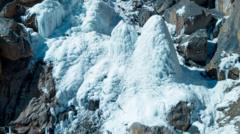
Artificial Ice Pyramids: A Revolutionary Solution for Mountain Communities
Nestled in the challenging terrain of the Himalayas, artificial ice pyramids have emerged as a transformative technology for addressing critical water shortages in India's remote mountain villages. These innovative structures represent a breakthrough approach to sustainable water management, enabling communities to capture and preserve precious water resources during harsh winter months for use during critical spring cultivation seasons.
The Challenge of Water Scarcity in Himalayan Regions
Mountain villages across the Indian Himalayas face unprecedented challenges when managing their agricultural water needs. The region's geographical and climatic characteristics create a pronounced seasonal water deficit, with abundant precipitation during winter months followed by severe drought conditions in spring and early summer. This mismatch between water availability and agricultural demand has historically threatened food security and economic stability in these remote communities.
Traditional water management approaches have proven insufficient for sustaining agricultural productivity. Wells and conventional storage systems fail to capture sufficient water during peak precipitation periods, leaving farmers vulnerable when irrigation becomes essential for their crops. The artificial ice pyramids technology directly addresses this critical gap by creating an innovative method of water preservation.
Understanding the Artificial Ice Pyramid System
The artificial ice pyramids operate through a deceptively simple yet scientifically sophisticated principle. During winter, when temperatures plummet and water is abundant, communities construct cone or pyramid-shaped structures designed to accumulate and preserve ice. These geometric formations are strategically created in locations where winter runoff naturally collects, allowing water to freeze and remain in solid form throughout the cold season.
The pyramid design serves multiple engineering purposes. The sloped surface minimizes solar exposure during the brief daylight hours of winter, reducing melting rates. The elevated positioning ensures proper drainage and prevents standing water. The structural geometry maximizes storage capacity while maintaining stability on mountain slopes. This elegant design allows communities to store substantial quantities of water in ice form with minimal technological infrastructure.
How the System Preserves Water Resources
As spring arrives and temperatures gradually increase, the accumulated ice pyramids melt naturally, releasing stored water precisely when agricultural demand peaks. This timing synchronization proves crucial for crop irrigation. Farmers can access reliable water supplies just as their fields require irrigation for planting and early growth stages. The gradual melting process ensures steady water flow rather than sudden flooding, providing better control over agricultural water management.
Implementation Across Mountain Villages
Multiple Himalayan communities have successfully adopted artificial ice pyramids as a cornerstone of their water security strategy. Village engineers and agricultural specialists work collaboratively to identify optimal locations for pyramid construction, typically selecting areas with consistent winter water flow and appropriate elevation. The construction process engages community members, creating employment opportunities while building collective expertise in water management.
The scalability of this technology has proven remarkable. Individual villages have constructed multiple pyramids of varying sizes, creating networked water storage systems. Some communities have organized collective pyramid-building initiatives, pooling resources and labor to maximize water preservation capacity. This collaborative approach strengthens community bonds while addressing shared resource challenges.
Agricultural and Economic Benefits
The introduction of artificial ice pyramids has delivered substantial improvements to agricultural outcomes in participating villages. Farmers report more reliable crop yields as irrigation water availability becomes predictable. This stability enables farmers to expand their cultivation areas and diversify their crop selections, previously impossible under unpredictable water conditions. Increased agricultural productivity directly translates to improved household incomes and enhanced food security.
Beyond immediate agricultural gains, the technology has stimulated broader economic development. Communities have experienced reduced dependence on expensive external water sources and irrigation infrastructure projects. The relatively low-cost construction of artificial ice pyramids makes water security accessible to economically disadvantaged village populations. Local employment generated through pyramid construction and maintenance provides additional income streams for community members.
Environmental and Climate Considerations
The artificial ice pyramids represent a climate-conscious approach to water management, requiring no external energy inputs or technological infrastructure. The system operates entirely through natural processes and gravitational principles. Unlike conventional water storage dams or treatment facilities, pyramid construction generates minimal environmental disruption. The approach respects natural seasonal cycles rather than attempting to override them through technological manipulation.
This sustainability factor becomes increasingly important as climate change intensifies water stress across mountain regions. Communities relying on artificial ice pyramids demonstrate resilience and adaptation capacity. The technology requires no ongoing energy consumption, produces no emissions, and creates no dependency on external supply chains. These characteristics position artificial ice pyramids as a genuinely sustainable solution for climate-vulnerable mountain communities.
Future Expansion and Global Relevance
The success of artificial ice pyramids in Indian mountain villages has attracted international attention from water management professionals and climate adaptation specialists. Researchers recognize the technology's potential applicability across numerous mountain regions worldwide experiencing similar seasonal water challenges. High-altitude areas in Central Asia, South America, and other regions could benefit from adapting this proven approach.
Government agencies and non-governmental organizations have begun supporting expanded pyramid construction programs. Training initiatives educate rural engineers in optimal design and construction techniques. Documentation of successful implementations provides valuable guidance for communities considering adoption. This expanding momentum suggests artificial ice pyramids will play an increasingly significant role in global water security strategies.
Conclusion
The artificial ice pyramids of the Himalayas represent far more than a clever engineering solution. They exemplify how communities can harness fundamental natural principles to address critical resource challenges. For mountain villages facing water scarcity, this technology offers genuine hope for agricultural sustainability and economic development. As climate pressures intensify globally, the lessons from these Indian mountain communities merit serious consideration by water planners everywhere seeking innovative, sustainable approaches to securing reliable water supplies.


