Southwest France Faces Intense Wildfires Amid Soaring 40C Heatwave
Wildfires in southwest France intensify as temperatures surge to 40C. Firefighters prepare for challenging conditions in Gironde region during critical containm...
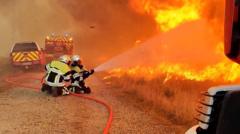
Wildfires in Southwest France Intensify During Critical Heat Period
Wildfires in southwest France are escalating as the region faces an unprecedented meteorological challenge. Emergency response teams are preparing for a dramatic surge in temperatures expected on Wednesday, creating hazardous conditions that threaten to complicate ongoing wildfire containment efforts across the Gironde region.
The convergence of active fires and extreme heat presents a formidable challenge for firefighting operations. Meteorological forecasts indicate that ambient temperatures could reach approximately 40 degrees Celsius, amplifying the fire behavior and creating unpredictable wind patterns that dispersed flames can exploit.
Emergency Response Preparations in Gironde
Firefighters stationed throughout the Gironde region have initiated comprehensive preparations to address the anticipated weather shift. These preparations include strategic repositioning of resources, enhanced crew rotations, and coordination with regional authorities to ensure adequate personnel and equipment deployment.
The fire management teams recognize that the imminent temperature increase will fundamentally alter fire dynamics. Higher temperatures typically accelerate fuel consumption rates, expand fire perimeters more rapidly, and complicate aerial suppression efforts. Fire behavior becomes increasingly erratic and difficult to predict under such extreme conditions.
Climate Impact on Containment Operations
The relationship between elevated temperatures and wildfire behavior is well-documented in firefighting protocols. As heat intensifies across the landscape, moisture content in vegetation decreases significantly, rendering plant material more combustible. This environmental transformation creates ideal conditions for fire propagation.
Wildfires in southwest France have already demonstrated increased intensity compared to typical seasonal patterns. The projected heatwave threatens to further accelerate fire spread rates, potentially overwhelming current containment strategies and necessitating expanded evacuation zones.
Regional Weather Forecasting and Alert Systems
French meteorological services have issued heat warnings affecting southwest France, with particular concern focused on the Gironde department. Multiple weather bulletins highlight the severity of the approaching temperature surge and its implications for firefighting effectiveness.
Temperature projections for Wednesday indicate peak conditions during afternoon hours, coinciding with the most challenging periods for fire suppression work. Firefighting protocols typically restrict certain aerial operations during peak temperature hours due to safety considerations and reduced effectiveness of aerial retardants.
Implications for Ongoing Containment Efforts
The timing of this heatwave presents additional complications for wildfires in southwest France. Current containment operations have achieved partial success in establishing firebreaks and defensive perimeters. However, these gains may be jeopardized if temperatures surge as forecasted.
Fire commanders have stressed that the Wednesday temperature peak will represent a critical juncture for containment operations. Resource allocation decisions made in advance of this period will prove crucial for preventing fires from overwhelming established defensive lines.
Broader Implications for France's Fire Season
The escalating situation across southwest France reflects broader climate patterns affecting European fire seasons. Heatwave events occurring in rapid succession have become increasingly common, creating sustained periods of elevated fire risk that strain emergency response infrastructure.
Wildfires in southwest France serve as a reminder of the interconnected nature of weather systems and fire behavior. Regional authorities continue monitoring atmospheric conditions closely and preparing contingency plans should containment efforts face unexpected setbacks during the forecast temperature surge.


