Free Speech Issue Could Impact Labour Votes
Liberty's poll reveals 60% of voters consider free speech crucial in elections. Government policies viewed negatively by many Britons on this rights issue.
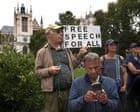
Free Speech Election Impact: What Voters Really Think
A comprehensive poll commissioned by the human rights organisation Liberty reveals that free speech election impact will be a decisive factor for millions of British voters at the forthcoming general election. The research, conducted by More in Common, demonstrates that citizens view the government's handling of free speech issues as increasingly problematic, with significant implications for political party support.
According to the survey findings, approximately 60 percent of respondents stated that a political party's stance on free speech would substantially influence their voting decisions in the upcoming general election. This substantial proportion indicates that free speech election impact represents far more than a marginal concern—it has become a central consideration for those evaluating which party deserves their support.
Public Perception of Current Government Approach
The polling data paints a concerning picture for the current administration regarding public sentiment on free speech policies. Many voters perceive the government's existing approach to free speech as detrimental to Britain's interests and democratic values. Liberty's interpretation of these results suggests that the Labour government's apparent inadequacy in protecting free speech could prove costly in electoral terms.
The research indicates that voters across various demographics are increasingly concerned about the trajectory of free speech protections under the current political leadership. This widespread unease transcends traditional party lines, suggesting that free speech protection has emerged as a unifying issue that cuts across conventional political divides.
Liberty's Assessment and Electoral Implications
The human rights organisation Liberty has utilised these polling insights to argue that Labour's stance on free speech represents a significant vulnerability in its electoral platform. If a substantial majority of voters prioritise free speech when casting their ballots, any perception of weakness on this issue could translate into lost votes and reduced support at the ballot box.
Liberty's commissioned research suggests that voters are not merely passively concerned about free speech; rather, they actively factor this consideration into their electoral calculus. This means that political parties neglecting to clearly articulate their commitment to robust free speech protections risk alienating a meaningful proportion of the electorate.
Broader Context: Free Speech as Electoral Priority
The prominence of free speech in voters' minds reflects broader societal anxieties about democratic freedoms and individual liberties. In recent years, various government policies have sparked debate about the appropriate balance between security concerns and fundamental rights. These discussions have clearly resonated with the public, elevating free speech from a specialist concern into mainstream electoral discourse.
Voters appear increasingly sophisticated in recognising that free speech protections constitute a foundational element of democratic governance. When considering which party to support, many citizens evidently assess not merely economic policies or social programmes, but also the degree to which each party demonstrates genuine commitment to preserving essential freedoms.
Implications for Future Political Campaigns
As parties prepare their strategies for the next general election, this polling data suggests they cannot afford to overlook free speech as a policy priority. Candidates and manifestos will likely face scrutiny regarding their specific commitments to protecting and extending free speech rights. Voters have signalled through this research that vague commitments will not suffice; they expect clear, detailed positions on this fundamental issue.
The findings indicate that political parties have both an opportunity and an obligation to engage substantively with voters about free speech. Those that articulate compelling visions for protecting democratic freedoms while maintaining public safety may find themselves better positioned to secure electoral support.
Looking Forward: What These Numbers Mean
The Liberty polling represents more than mere statistical observation; it constitutes a warning signal to the political establishment that free speech concerns will shape electoral outcomes. Whether Labour can effectively address these concerns and rebuild voter confidence in its commitment to free speech protection will significantly influence its electoral prospects.
As Britain approaches its next general election, free speech election impact will undoubtedly feature prominently in campaign messaging, policy debates, and voter deliberations. The public has spoken clearly about what matters to them, and political leaders would be wise to listen carefully.