EFF urges IEC to address identified gaps before upcoming elections
Gardee says the credibility of the IEC which has now come under the spotlight is questionable
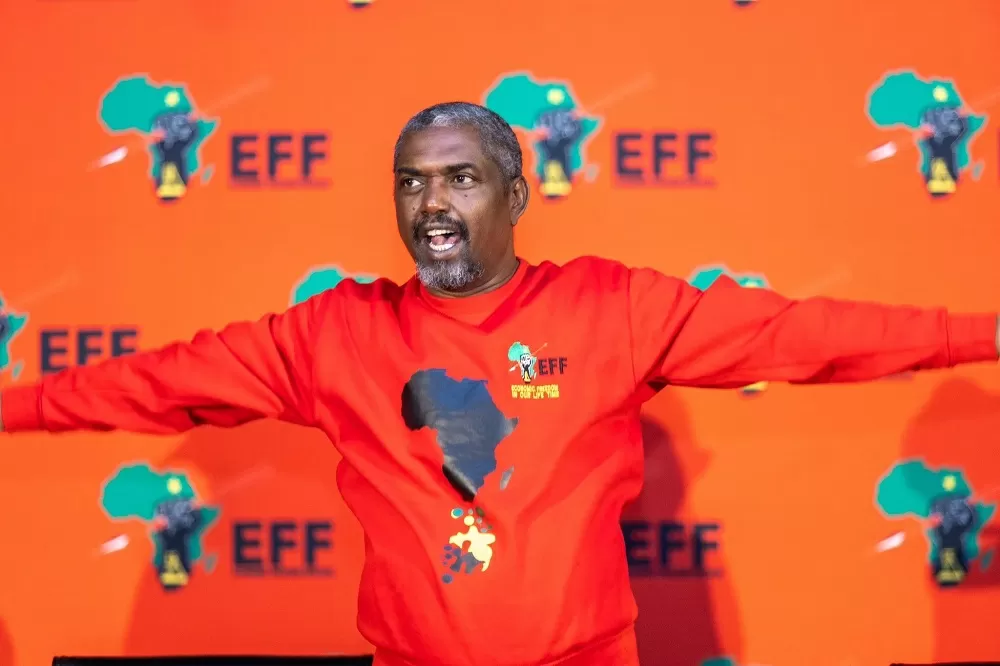
The Independent Electoral Commission (IEC) has long been considered as the cornerstone of democracy in South Africa. Its role in ensuring free and fair elections has been commended not only in the country, but also internationally. However, recent events have called into question the credibility of the IEC, leaving many wondering if it can still be trusted to uphold the principles of democracy.
The latest controversy to rock the IEC comes from none other than Gardee, the General Secretary of the Economic Freedom Fighters (EFF). In a recent statement, Gardee has raised concerns about the credibility of the IEC, stating that it has come under the spotlight and is now questionable. This statement has caused a stir among South Africans, who have always held the IEC in high regard.
It is understandable why Gardee's statement has caused such an uproar. The IEC has always been seen as a neutral and independent body, responsible for organizing and overseeing elections. Its integrity has never been questioned, until now. With the upcoming local government elections, the last thing anyone wants is to have doubts about the credibility of the institution responsible for ensuring a free and fair electoral process.
Gardee's statement stems from the recent resignation of the IEC's Vice-Chairperson, Terry Tselane. Tselane, who served as the Deputy Chairperson for the past 18 years, cited concerns about the integrity and credibility of the IEC as his reason for stepping down. This resignation, coupled with the fact that four other commissioners are due to leave the IEC later this year, has raised red flags and sparked debates about the future of the institution.
The IEC, however, has dismissed Gardee's claims, stating that Tselane's resignation was due to personal reasons and not a reflection of the IEC's credibility. In a press conference, the IEC Chairperson, Glen Mashinini, emphasized that the commission remains committed to its mandate and will continue to uphold the highest standards of integrity and accountability.
Despite the IEC's reassurances, the question of credibility still lingers. The timing of Tselane's resignation, along with the impending departure of four other commissioners, raises concerns about the stability and independence of the institution. This has led to calls for the appointment of new commissioners to be done in a transparent and non-partisan manner.
The IEC plays a vital role in ensuring that South Africa's electoral process is transparent and credible. It is imperative that the institution is free from any political interference and maintains its independence. Therefore, any appointments made to the IEC must be based on merit and not political affiliations. The credibility of the IEC is crucial in upholding the democratic principles of our country, and it is the responsibility of all stakeholders to protect it.
In light of the current situation, the IEC must take proactive steps to restore faith in the institution. This can be achieved through open communication with the public, ensuring transparency in its processes, and addressing any concerns raised by political parties. The IEC must also work closely with civil society organizations and other relevant stakeholders to uphold its integrity and credibility.
As South Africans, we must remember that the IEC is a product of our democracy, and it is our duty to protect its independence. The credibility of the IEC should not be taken lightly, as it has a direct impact on the legitimacy of our government. We must continue to hold the IEC accountable and demand that it operates with the highest level of integrity.
In conclusion, while Gardee's statement may have sparked controversy, it has also shed light on the importance of safeguarding the credibility of the IEC. It is now up to the institution to prove that it is still a trustworthy and independent body, worthy of our trust. The upcoming local government elections will serve as a test for the IEC, and it is our hope that the institution will rise to the occasion and maintain its reputation as the guardian of democracy in South Africa.