Colombia's Brutal Internal Conflict Shapes Presidential Race
Colombia's escalating internal conflict dominates the presidential election as a left-wing senator backing armed gang negotiations faces a Trump-endorsed outsid...
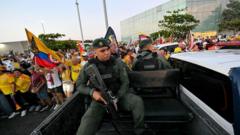
Colombia's Internal Conflict Becomes Central Election Issue
Colombia's internal conflict continues to intensify and reshape the nation's political landscape ahead of the upcoming presidential election. This complex crisis, characterized by violence from organized armed groups and territorial disputes, has emerged as the defining issue influencing voter sentiment and candidate positioning across the country.
The collision between competing visions for addressing Colombia's internal conflict has crystallized around two contrasting candidates with fundamentally different approaches. One represents traditional leftist ideology and advocates for dialogue-based solutions, while the other embodies an anti-establishment movement with backing from international conservative figures.
The Left-Wing Candidate and Negotiation Strategy
On one side stands a prominent left-wing senator whose political platform centers on establishing direct negotiations with armed gangs operating throughout Colombian territory. This candidate believes that diplomatic channels offer a viable path toward reducing violence and addressing the underlying conditions that fuel criminal organization recruitment.
The senator's approach emphasizes understanding the socioeconomic factors driving gang membership and criminal activity. Advocates for this position argue that military-only solutions have proven insufficient over decades of conflict. Instead, they propose creating frameworks for structured dialogue that could potentially lead to disarmament agreements and reintegration programs for armed group members.
This negotiation-focused strategy represents a significant departure from previous hardline approaches. Supporters believe that engaging with armed organizations, rather than exclusively pursuing military operations, offers possibilities for genuine long-term peace. The candidate has articulated detailed proposals for addressing root causes including poverty, limited economic opportunity, and lack of state presence in remote regions.
The Outsider Candidate and External Support
The opposing candidate represents an outsider political movement that has attracted international attention, particularly from prominent conservative figures. This candidate has received explicit endorsement from international political leaders, signaling cross-border interest in Colombia's election outcome.
The outsider candidate's platform emphasizes stronger security measures and a more confrontational stance toward armed criminal organizations. This approach aligns with traditional security-first policies that prioritize direct law enforcement and military action against gang operations. The candidate's message resonates with voters concerned about immediate security threats and visible government action against criminal elements.
The international backing for this candidate reflects broader geopolitical dynamics and ideological preferences among certain foreign political circles. The endorsement carries symbolic weight but also raises questions about external influence in Colombia's domestic political processes.
How Colombia's Internal Conflict Dominates Campaign Messaging
Colombia's internal conflict provides the primary framework through which both candidates articulate their broader political visions. Security policy, gang violence prevention, and strategies for territorial control have become inseparable from economic policy discussions and social program priorities.
Campaign messaging increasingly focuses on which approach would prove more effective in reducing violence statistics. Voters face a fundamental choice between incremental negotiation-based strategies versus accelerated security operations. Each candidate presents their methodology as the only viable solution to Colombia's most pressing challenge.
The Stakes for Colombian Democracy
This election carries significant implications not only for immediate policy direction but for the long-term trajectory of Colombian society. The outcome will likely determine whether future governments pursue dialogue initiatives or maintain confrontational security strategies.
Understanding these competing visions requires acknowledging the genuine complexity of Colombia's internal conflict. No simple solution addresses the interconnected problems of drug trafficking networks, territorial gang warfare, rural insurgency groups, and urban criminal organizations. Both candidates claim to offer comprehensive solutions, yet each reflects fundamentally different philosophical approaches to governance and conflict resolution.
The voting population must weigh these alternatives while considering economic conditions, social services provision, and international relations alongside security concerns. Colombia's internal conflict will continue shaping this election until voters ultimately determine which candidate's vision better reflects their priorities for the nation's future.


